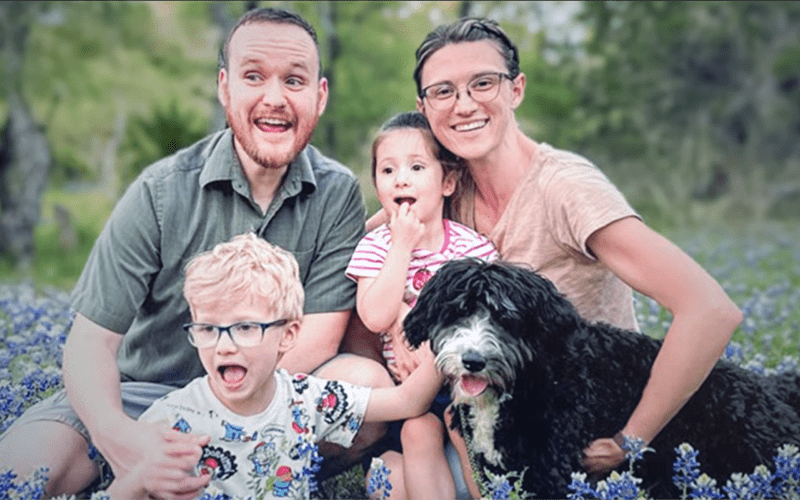

For most of her life, Jamie Lane knew polycystic kidney disease could one day change everything.
The condition runs in Jamie’s family. Her great-grandmother and grandmother had it. Her mother died at 46 from a ruptured brain aneurysm. Her aunt, uncle, brother and cousin have all had kidney transplants.
Jamie learned she had the disease when she was 25. For years, she wondered when it would catch up with her.
“I just lived a life being really afraid and hoping that I would live long enough to see my kids graduate high school and go to college,” Jamie said.
What she did not expect was that her liver, not just her kidneys, would later put her life at risk.
When Something Was Not Right
 Photos by Alison Conklin,
Bonus Days Magazine
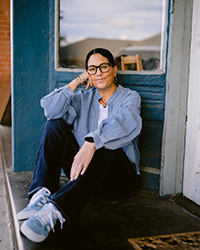
Jamie stayed active for much of her adult life. She was an athlete from a young age and was used to caring for her body and paying close attention to her health.
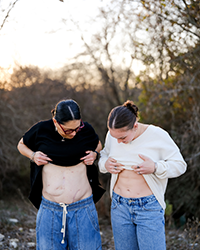
But in her 40s, she noticed changes in her abdomen. At first, she thought her enlarged kidneys were the cause. By the time she moved to Texas in 2020, her abdomen was so swollen that strangers sometimes thought she was pregnant.
She also had severe acid reflux, pressure in her abdomen and shortness of breath when she bent over.
“I’ve been an athlete my whole life,” Jamie said. “I couldn’t even bend over and tie my shoes without losing my breath.”
Doctors later found that Jamie also had polycystic liver disease. Cysts had made her liver much larger than normal and crowded the organs around it. Jamie said that when the diseased organ was removed, it weighed about 24 pounds.
She had surgery to treat some of the liver cysts. But after a later procedure, her health got worse quickly.
In January 2023, Jamie went into liver failure.
Fluid began building up in her abdomen. This condition is called ascites. At one point, Jamie needed a procedure every week to drain the fluid. During one visit, doctors removed 15 pounds of fluid.
Then came another frightening diagnosis: early-stage breast cancer.
Within a few months, Jamie was facing liver failure, declining kidney function and cancer treatment. She had a lumpectomy and radiation before she could move forward with a transplant.
“I was really, really sick,” she said.
Learning There Was Another Way to Donate
Jamie was referred for transplant care and evaluated for both a liver transplant and a kidney transplant.
Kidney transplants were familiar to her family. Liver transplantation was not.
Then Jamie learned something that changed what she thought was possible: a living person can donate part of their liver because the liver can grow back.
“I know so many people who live across the country and don’t even have the opportunity to have a living donor transplant,” Jamie said. “Learning all about that was like, ‘Wait, what?’”
Jamie began telling family and friends that she needed a donor. The response was overwhelming.
Through University Health’s living donor process, 32 people completed health questionnaires to see if they could donate part of their liver to her.
One of them was the person Jamie hoped would not be a match: her daughter, Cam.
Cam was a college soccer player getting ready for her senior year. Jamie first thought their blood types did not match and felt relieved. Then Cam tested again. She had type A-positive blood, the same as her mother.
Jamie knew what would happen next.
“There was no way she wasn’t going to want to do this,” Jamie said. “We’re really, really close.”
Jamie had spent years trying to protect her children from the fear surrounding her disease. Now her daughter wanted to help save her life.
“There really was never a question or doubt in my mind about this decision,” Cam said. “If I was able to, I was going to do it.”
After detailed testing through the transplant program, Cam was approved as her mother’s living liver donor.
“She saved my life,” Jamie said. “People say, ‘What?’ And I’m like, no, she literally donated her liver to me.”
Expert Care When Jamie Needed It Most
Photos by Alison Conklin,
Bonus Days Magazine
Living donation involves two patients, two surgical teams and careful planning. One team safely removes part of a healthy donor’s liver. Another team transplants it into the recipient.
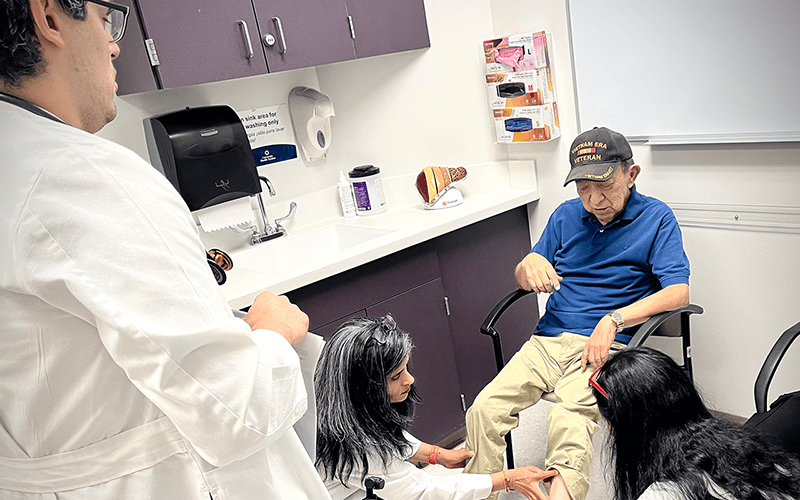
For Jamie and Cam, that meant putting their trust in the University Health Transplant Institute.
Their transplant day lasted for hours as the two teams cared for mother and daughter. For Jamie, the days after surgery were just as important.
Four days after her transplant, she knew something was wrong.
She had gone to the bathroom when she became very weak. Within moments, her hospital room was filled with caregivers. Jamie was bleeding internally and needed to return to the intensive care unit.
It remains one of the scariest moments of her life.
Jamie remembers one ICU nurse looking directly at her as the team prepared to move her.
“She just kept looking at me saying, ‘You’re going to be OK. We got you. You’re in the best place that you could possibly be. We’re going to take care of you,’” Jamie recalled.
The transplant team stepped in, and Jamie had more treatment to control the bleeding.
What she remembers, almost as clearly as her fear, is the skill and kindness of the people around her.
“Those ICU nurses were just incredible,” she said. “I was so well taken care of there.”
That relationship continued after the ICU.
Jamie describes herself as a very informed patient. She researches her conditions, reviews her lab results and comes to appointments with questions.
Instead of being discouraged by that, she said her University Health transplant physicians welcomed it.
“They’re really respectful about that, and they trust me,” Jamie said. “I’ve met both teams, and I just love my doctors.”
For Cam, watching her mother face so many unknowns was both terrifying and inspiring. “It was really inspiring how she continued to push herself mentally and physically and advocate for herself throughout the last couple of years,” Cam said.
For Jamie, being treated as a partner in her care mattered.
She encourages other patients to speak up, too.
“You have to advocate for yourself,” she said. “You can question a doctor. You can go in and say, ‘Look, what about this? Can we look at this?’ You know how you feel.”
A Second Transplant and Another Living Donor
Jamie had been evaluated for both liver and kidney transplants. Since Cam was ready and approved to donate part of her liver, Jamie and her doctors chose to move forward with the liver transplant first while they kept watching her kidneys.
Her kidney function continued to decline in the months that followed.
Seven months after receiving part of her daughter’s liver, Jamie had another transplant.
This time, a friend became her living kidney donor.
Jamie had now received two organs from two living donors.
Her experience gave her a new view of what donation can mean, not only for someone facing organ failure but also for the people who love them.
Getting Her Life Back
Today, the woman who once could not bend over without losing her breath spends several days a week on the golf course.
Jamie and her husband joined a country club near their Austin home. She has built a new group of friends, plays golf three or four days a week and walks the course.
Jamie also has a life she was not always sure she would have.
She has watched her children grow into adults. She returned to the activities she loves. And she and her daughter have become advocates for transplant patients and for who can give others more time without having to stop their own lives.
“It doesn’t even necessarily put your life on pause; it really just throws in a little detour for a couple of months,” Cam said.
Looking for a Second Opinion?
If you or someone you love is facing organ failure or has questions about transplant options, University Health transplant specialists can provide another perspective on your care. Get started today.