
Diabetes is one of the most common medical conditions among people in the United States. It also impacts us close to home. According to University Health Institute for Public Health, more than one-third of San Antonio residents had prediabetes in 2021. In the same year, 12% of Bexar County residents were diagnosed with diabetes.
The good news is that diabetes can be easily detected and managed. If you catch diabetes early enough, your primary care provider (PCP) can help guide you on your diabetes journey. If your PCP recommends further assistance, they will then refer you to an endocrinologist who specializes in diabetes treatment.
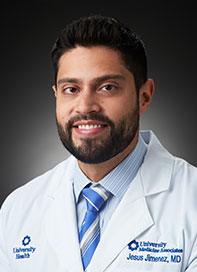
Dr. Jesus Jimenez, a primary care provider at University Health, discusses ways your PCP can help you or your children manage diabetes.
What Is Diabetes?
Diabetes is a condition that causes high blood glucose (blood sugar). There are two types of diabetes: Type 1 and Type 2.
Type 1 Diabetes
Type 1 diabetes is an autoimmune condition in which the body’s immune system attacks the cells that make insulin. Insulin is a hormone produced by the pancreas, which helps blood sugar get into the body’s cells to be used for energy. Without insulin, sugar can’t get into the cells and stays in the blood.
Risk factors for Type 1 diabetes include:
- Being a child, teen or young adult
- Being Caucasian
- Having a family history of Type 1 diabetes
Type 2 Diabetes
Type 2 diabetes is a condition in which the body’s cells develop a resistance to insulin and require more insulin to do the same job. The pancreas tries to keep up by producing more insulin, but over time, it can’t meet the demand.
“This results in constantly elevated blood sugar levels, which can cause inflammation in the vessels and, over time, cardiovascular disease,” Dr. Jimenez said.
What Causes Diabetes?
Anyone can develop diabetes, but certain factors can increase your risk, including family history.
“There’s somewhat of a genetic component to diabetes,” Dr. Jimenez said. “But overall, the same family will usually have similar daily habits as far as diet and exercise.”
Sharing the same unhealthy habits as your family significantly increases your personal risk. “If you have one parent who has Type 2 diabetes, your risk of developing diabetes in your lifetime goes up by 30-40%,” said Dr. Alberto Chavez Velazquez, an endocrinologist at University Health Texas Diabetes Institute. “If both of your parents have Type 2 diabetes, your risk increases to more than 50%.”
Take our free Diabetes Health Risk Assessment to determine your risk for developing Type 2 Diabetes.
How Your PCP Can Help You Get Screened for Diabetes
If you think you’re at a higher risk of developing diabetes, the first step is to talk with your PCP about screening for diabetes.
“Your primary care doctor is the best resource to screen and treat for diabetes,” said Dr. Jimenez. “They adjust treatment based on your specific clinical needs and be the ones to determine if you need to be referred to an endocrinologist for specialty care of your diabetes.”
Testing for Diabetes
Regular glucose testing may be part of your annual checkups even if you aren’t at risk. The American Diabetes Association recommends beginning diabetes screening at age 35. Your PCP may use a fasting glucose test to check your blood sugar or an A1C test, which measures your blood sugar over three months.
These tests play an important role in both preventing and diagnosing diabetes since Type 2 diabetes often doesn’t cause noticeable symptoms at first.
“People with Type 2 diabetes can present without symptoms for several years, and some people will not notice anything at all,” Dr. Velazquez said. “Unfortunately, this means that the disease will progress and cause irreversible damage to the body until we actually get enough symptoms that the patient comes in for their routine screening.”
Regularly seeing your PCP and having routine lab work can help you keep an eye on your blood sugar levels and take steps to treat your condition as necessary.
How Your PCP Can Help You Manage Your Diabetes After a Diagnosis
If you’re diagnosed with prediabetes or diabetes, your PCP can help you determine next steps. Prediabetes can often be managed and even reversed with lifestyle changes, such as exercising regularly and eating a healthier diet.
Your PCP can recommend steps to lower your blood sugar into a healthier range. If necessary, your provider can also prescribe medications that may help.
If you have prediabetes or diabetes, you may need more frequent visits with your PCP to check your blood sugar and determine whether treatment is working well. Your provider will let you know how often you need to be seen and whether you need to check your blood sugar at home in between appointments.
Your primary care provider can play an important role in helping you manage diabetes after a diagnosis. In some cases, you may also be referred to other providers, such as an endocrinologist, a dietitian or a diabetes educator for well-rounded care related to your condition.
Primary Care at University Health
The best way to catch diabetes early is to visit your primary care provider for yearly checkups. Schedule an appointment to screen for diabetes.
Our highly trained primary care providers will take the time to get to know you, your lifestyle and your health concerns. Whether it’s diabetes or another complex condition, they will help coordinate and collaborate with you and a referred specialist to ensure you receive the best care.
Learn more about how else your health can benefit from our primary care team.
Diabetes Care at Texas Diabetes Institute
Our endocrinologists can help treat and manage diabetes and other endocrine disorders.
The University Health Texas Diabetes Institute is the nation’s leading and most comprehensive diabetes care and research center. The team is constantly developing revolutionary diabetes treatments at Texas Diabetes Institute.
Learn more about our diabetes care team.